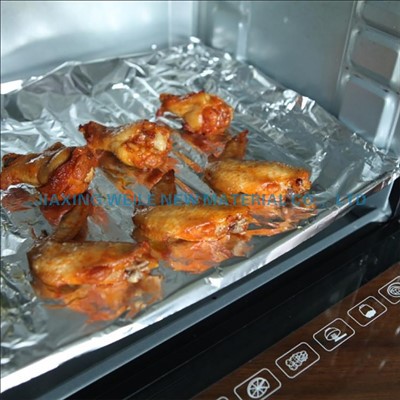
As a supplier of Raw Aluminum Foil Jumbo Rolls, I've had the privilege of witnessing firsthand the diverse applications and high - demand nature of this product. Today, I'd like to delve into the quality standards of raw aluminum foil jumbo rolls, which are crucial for both producers and end - users.
Chemical Composition
The chemical composition of raw aluminum foil jumbo rolls is the cornerstone of its quality. Aluminum foil is primarily made from aluminum, but it often contains small amounts of other elements to enhance its properties. For instance, pure aluminum is relatively soft. By adding elements like manganese, magnesium, and silicon, we can improve its strength and hardness.
Manganese can increase the corrosion resistance of aluminum foil. It forms a protective oxide layer on the surface, preventing the foil from reacting with the surrounding environment. Magnesium, on the other hand, can enhance the mechanical properties of the foil. It makes the foil more ductile, allowing it to be easily rolled into thin sheets without breaking.
The purity of aluminum in the foil is also an important factor. High - purity aluminum (usually above 99%) is often used in applications where chemical reactivity needs to be minimized, such as in the food and pharmaceutical industries. For other general - purpose applications, aluminum with a purity of around 98% may be sufficient.
Thickness and Tolerance
The thickness of raw aluminum foil jumbo rolls is a critical quality parameter. Different applications require different thicknesses of foil. For example, in the food packaging industry, thin foils (usually between 6 - 20 microns) are commonly used for wrapping snacks and confectionery, as they provide a good balance between flexibility and barrier properties. In the construction industry, thicker foils (50 - 200 microns) may be used for insulation purposes.


Tolerance in thickness is equally important. A tight thickness tolerance ensures uniformity across the entire roll. In our production process, we strive to maintain a thickness tolerance of ± 1 - 2 microns for thin foils and ± 5 - 10 microns for thicker foils. This level of precision is essential to meet the strict requirements of our customers. For instance, in the electronics industry, where aluminum foil is used as a capacitor material, even a small variation in thickness can affect the performance of the capacitor.
Surface Quality
The surface quality of raw aluminum foil jumbo rolls can significantly impact its performance. A smooth and clean surface is essential for many applications. In the food packaging industry, a smooth surface ensures that the foil can be easily sealed, preventing the entry of air and moisture. It also gives the packaged product an attractive appearance.
There should be no visible scratches, dents, or stains on the surface of the foil. These defects can not only affect the aesthetic appeal but also compromise the integrity of the foil. For example, a scratch on the surface can act as a weak point, making the foil more prone to tearing.
In addition, the surface finish of the foil can be classified into different types, such as bright finish and matte finish. Bright finish foils have a shiny appearance and are often used in applications where visual appeal is important, such as in luxury food packaging. Matte finish foils, on the other hand, have a duller appearance and are more suitable for applications where glare needs to be minimized, such as in some industrial packaging.
Mechanical Properties
The mechanical properties of raw aluminum foil jumbo rolls, including tensile strength, elongation, and tear resistance, are vital for its performance. Tensile strength refers to the maximum stress that the foil can withstand before breaking. A high tensile strength is necessary for applications where the foil will be subjected to stretching or pulling forces, such as in the wrapping of large - sized products.
Elongation is the ability of the foil to stretch without breaking. It is an important property for applications where the foil needs to conform to the shape of the product being wrapped. For example, in the automotive industry, aluminum foil is used for heat shielding, and it needs to be able to bend and stretch around various components without tearing.
Tear resistance is also crucial, especially in applications where the foil may be accidentally torn during handling. A foil with good tear resistance can prevent premature failure and ensure the integrity of the packaging or insulation.
Barrier Properties
One of the key advantages of aluminum foil is its excellent barrier properties. It can effectively block the passage of light, oxygen, moisture, and odors. In the food packaging industry, these barrier properties are essential for preserving the freshness and quality of the food. For example, a package of coffee beans wrapped in aluminum foil can prevent the beans from being exposed to oxygen, which can cause them to go stale.
The barrier properties of aluminum foil are mainly determined by its thickness and surface quality. Thicker foils generally have better barrier properties than thinner foils. A smooth and defect - free surface also helps to maintain the integrity of the barrier.
Width and Length
The width and length of raw aluminum foil jumbo rolls are important considerations for our customers. The width of the roll should be consistent with the requirements of the customer's production equipment. For example, if a customer uses a specific type of packaging machine, the width of the foil roll needs to be compatible with the machine's specifications.
The length of the roll is also a factor. Longer rolls can reduce the frequency of roll changes during the production process, improving production efficiency. However, longer rolls also need to be carefully wound to ensure that there are no wrinkles or loose layers.
Applications and Corresponding Quality Requirements
Food Packaging
In the food packaging industry, the quality requirements for raw aluminum foil jumbo rolls are very strict. The foil must be non - toxic and comply with food safety regulations. It should have excellent barrier properties to protect the food from external factors such as light, oxygen, and moisture. The surface of the foil should be smooth and clean to prevent any contamination of the food.
For example, Soft Raw Material Food Aluminum Foil Jumbo Roll is specifically designed for food packaging applications. It is made from high - quality raw materials and undergoes strict quality control processes to ensure its safety and performance.
Electronics
In the electronics industry, aluminum foil is used in various applications such as capacitors, electromagnetic shielding, and heat dissipation. For capacitor applications, the foil needs to have a very uniform thickness and a high level of purity to ensure stable electrical performance. In electromagnetic shielding, the foil should have good conductivity and mechanical strength to effectively block electromagnetic interference.
Construction
In the construction industry, aluminum foil is often used for insulation purposes. The foil needs to have good thermal insulation properties and mechanical strength. It should be able to withstand the environmental conditions in the construction site, such as temperature changes and moisture.
Hookah Industry
In the hookah industry, Hookah Jumbo Roll is a popular product. The foil used in hookahs needs to be heat - resistant and have a certain level of flexibility. It should be able to withstand the high temperatures generated during the smoking process without melting or breaking.
Conclusion
In conclusion, the quality standards of raw aluminum foil jumbo rolls are multifaceted, covering aspects such as chemical composition, thickness, surface quality, mechanical properties, barrier properties, width, and length. Different applications have different quality requirements, and as a supplier, we are committed to meeting these diverse needs.
If you are interested in our Aluminium Foil Jumbo Roll products and would like to discuss your specific requirements, please feel free to contact us for procurement and negotiation. We are always ready to provide you with high - quality products and excellent service.
References
- Aluminum Association. Aluminum Foil Technology Handbook.
- International Organization for Standardization (ISO). Standards related to aluminum foil products.
- Food and Drug Administration (FDA). Regulations on food - contact materials, including aluminum foil.