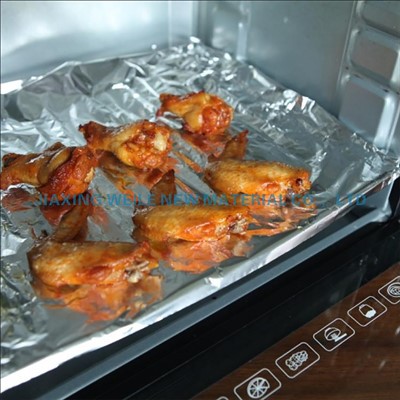
Embossed aluminium foil rolls are a versatile and widely used product in various industries, from food packaging to insulation. One of the key properties that often comes under scrutiny is their impact resistance. As a leading supplier of embossed aluminium foil rolls, I've had extensive experience with these products and understand the importance of impact resistance in different applications.
Understanding Impact Resistance
Impact resistance refers to a material's ability to withstand sudden forces or shocks without breaking, cracking, or deforming significantly. In the case of embossed aluminium foil rolls, this property is crucial as it determines the durability and reliability of the product during handling, transportation, and actual use.
The embossing process plays a significant role in enhancing the impact resistance of aluminium foil. By creating a pattern on the surface of the foil, the embossing increases the stiffness and strength of the material. This is because the embossed pattern distributes the impact force over a larger area, reducing the stress concentration at any single point. As a result, the foil is less likely to tear or puncture when subjected to an impact.
Factors Affecting Impact Resistance
Several factors can influence the impact resistance of embossed aluminium foil rolls. These include the thickness of the foil, the type of embossing pattern, and the quality of the aluminium used.
- Thickness: Generally, thicker aluminium foils have better impact resistance than thinner ones. This is because a thicker foil can absorb more energy before it fails. However, increasing the thickness also increases the cost and weight of the product, so a balance needs to be struck between impact resistance and other considerations such as cost and flexibility.
- Embossing Pattern: Different embossing patterns can have different effects on impact resistance. Some patterns, such as diamond or hexagonal patterns, are more effective at distributing impact forces than others. The depth and density of the embossing also play a role. A deeper and more densely embossed pattern can provide greater stiffness and strength, resulting in better impact resistance.
- Aluminium Quality: The quality of the aluminium used in the foil is another important factor. High-quality aluminium with a uniform grain structure and low impurity content is more likely to have good impact resistance. Additionally, the alloy composition of the aluminium can also affect its mechanical properties, including impact resistance.
Applications and Impact Resistance Requirements
The impact resistance requirements for embossed aluminium foil rolls vary depending on the application. Here are some common applications and their specific impact resistance needs:
- Food Packaging: In the food industry, embossed aluminium foil rolls are used for packaging a wide range of products, including snacks, ready-to-eat meals, and beverages. The foil needs to be able to withstand the handling and transportation process without tearing or puncturing, which could compromise the integrity of the package and lead to spoilage of the food. For example, when packaging sharp-edged snacks like chips, the foil should have sufficient impact resistance to prevent the chips from piercing through the foil.
- Insulation: Embossed aluminium foil is also used as an insulation material in buildings and industrial applications. In this case, the foil needs to be able to withstand the installation process, which may involve bending, cutting, and handling. It should also be able to resist minor impacts during normal use, such as accidental bumps or scratches.
- Automotive and Aerospace: In the automotive and aerospace industries, embossed aluminium foil rolls are used for various purposes, including heat shielding and electromagnetic shielding. These applications often require high impact resistance to ensure the safety and reliability of the components. For example, in an automotive engine compartment, the foil needs to be able to withstand the vibrations and impacts generated by the engine without failing.
Our Products and Impact Resistance
As a supplier of embossed aluminium foil rolls, we offer a wide range of products with different thicknesses, embossing patterns, and alloy compositions to meet the diverse needs of our customers. Our products are designed to provide excellent impact resistance while also offering other desirable properties such as flexibility, heat resistance, and barrier properties.
- Extra Wide Aluminum Foil Roll: Our Extra Wide Aluminum Foil Roll is available in various thicknesses and embossing patterns. The extra-wide format makes it suitable for applications where large areas need to be covered, such as in commercial food packaging or industrial insulation. The embossing pattern on our extra-wide foil is carefully designed to provide optimal impact resistance, ensuring that the foil can withstand the rigors of handling and transportation.
- Heavy Duty Greaseproof Aluminium Foil ROLL: Our Heavy Duty Greaseproof Aluminium Foil ROLL is specifically designed for applications where high impact resistance and greaseproof properties are required. This foil is thicker and more durable than standard foils, making it ideal for packaging greasy foods or for use in industrial environments where there is a risk of grease contamination. The embossing pattern on our heavy-duty foil enhances its impact resistance and also provides a non-slip surface, making it easier to handle.
- Plain Aluminum Foil Roll: Our Plain Aluminum Foil Roll is a versatile product that can be used in a variety of applications. While it does not have the embossing pattern of our other products, it still offers good impact resistance due to its high-quality aluminium construction. This foil is suitable for applications where a smooth surface is required, such as in baking or for wrapping delicate items.
Testing and Quality Assurance
To ensure that our embossed aluminium foil rolls meet the highest standards of impact resistance, we conduct rigorous testing on all our products. We use advanced testing equipment and techniques to simulate real-world impact conditions and measure the performance of the foil. Our testing procedures include drop tests, puncture tests, and impact energy absorption tests.
In addition to testing, we also have a strict quality control system in place to monitor every stage of the manufacturing process. From the selection of raw materials to the final inspection of the finished product, we ensure that only the highest quality embossed aluminium foil rolls are delivered to our customers.
Conclusion
Impact resistance is a critical property of embossed aluminium foil rolls, especially in applications where the foil needs to withstand handling, transportation, and other forms of stress. By understanding the factors that affect impact resistance and choosing the right product for the specific application, customers can ensure that they get the best performance and value from their embossed aluminium foil rolls.


As a leading supplier of embossed aluminium foil rolls, we are committed to providing our customers with high-quality products that meet their specific needs. Our extensive range of products, combined with our rigorous testing and quality control procedures, ensures that our customers can rely on us for consistent and reliable performance.
If you are interested in learning more about our embossed aluminium foil rolls or have specific requirements for your application, please feel free to contact us. We look forward to discussing your needs and providing you with the best solution.
References
- ASM Handbook, Volume 2: Properties and Selection: Nonferrous Alloys and Special-Purpose Materials. ASM International.
- Aluminium Association. Aluminum Standards and Data.
- ISO 11343:2014 - Adhesives - Determination of dynamic resistance to cleavage.