Hey there! As a supplier of embossed aluminium foil rolls, I'm super excited to take you through the production process of these nifty products. Embossed aluminium foil rolls are used in a ton of different places, from food packaging to insulation. So, let's dig into how they're made!
Step 1: Raw Material Preparation
The first step in making embossed aluminium foil rolls is getting the raw materials ready. We start with high - quality aluminium ingots. These ingots are made from bauxite ore, which is mined and then refined through a series of processes to extract pure aluminium.
The quality of the aluminium ingots is crucial because it directly affects the final product. We source our ingots from reliable suppliers who meet strict quality standards. Once we have the ingots, they are heated in a furnace at extremely high temperatures, usually around 700 - 900 degrees Celsius. This heating process makes the aluminium malleable, so it can be easily shaped and formed in the next steps.
Step 2: Rolling
After the aluminium is heated and softened, it's time for the rolling process. The molten aluminium is poured into a casting machine to form large aluminium slabs. These slabs are then sent through a series of rolling mills.
In the rolling mills, the aluminium slabs are gradually reduced in thickness. The rolling mills have large rollers that press the aluminium, making it thinner and longer with each pass. This process is repeated multiple times until the aluminium reaches the desired thickness for the embossed foil. For embossed aluminium foil rolls, the thickness can range from a few microns to several millimeters, depending on the specific application.
Step 3: Annealing
Once the aluminium has been rolled to the right thickness, it goes through an annealing process. Annealing is basically a heat - treatment process that relieves the internal stresses in the aluminium foil.
During the rolling process, the aluminium can become hard and brittle due to the mechanical work done on it. Annealing helps to make the foil more ductile and easier to work with. The foil is heated to a specific temperature, usually between 200 - 400 degrees Celsius, and then slowly cooled. This controlled heating and cooling process restores the aluminium's original properties and makes it ready for the next step, which is embossing.
Step 4: Embossing
Now, this is the step that gives our embossed aluminium foil rolls their unique look and feel. The embossing process involves passing the flat aluminium foil through a pair of embossing rollers. These rollers have a specific pattern engraved on their surface.
As the foil passes between the rollers, the pattern is pressed onto the foil, creating raised and recessed areas. There are all sorts of patterns that can be used, from simple geometric shapes to more complex designs. The choice of pattern depends on the customer's requirements and the intended use of the foil. For example, if the foil is going to be used for food packaging, a pattern that provides better grip or aesthetic appeal might be chosen.
Step 5: Surface Treatment
After embossing, the aluminium foil might go through a surface treatment process. This is done to improve the foil's properties, such as corrosion resistance and printability.
One common surface treatment is coating. A thin layer of coating material, such as a polymer or a lacquer, is applied to the surface of the foil. This coating can protect the aluminium from oxidation and other environmental factors. It can also make the foil more suitable for printing, which is important if the foil is going to have labels or branding on it.
Step 6: Slitting and Rewinding
Once the embossed and surface - treated foil is ready, it's time to cut it into the right size and rewind it onto rolls. The large sheets of foil are sent through a slitting machine, which cuts them into narrower strips.
The width of the strips can vary depending on the customer's needs. After slitting, the strips are rewound onto cores to form individual embossed aluminium foil rolls. The rewinding process is carefully controlled to ensure that the foil is wound tightly and evenly, without any wrinkles or loose edges.
Step 7: Quality Control
Before the embossed aluminium foil rolls are shipped out to customers, they go through a rigorous quality control process. We check the rolls for a variety of factors, such as thickness uniformity, pattern clarity, and surface finish.
We use advanced testing equipment to measure the thickness of the foil at different points to make sure it meets the specified standards. We also visually inspect the rolls for any defects, such as scratches, dents, or uneven embossing. Only the rolls that pass our strict quality control tests are approved for sale.
Applications of Embossed Aluminium Foil Rolls
Embossed aluminium foil rolls have a wide range of applications. In the food industry, they are used for packaging all sorts of products, from snacks to ready - to - eat meals. The embossed pattern can provide better grip when handling the foil, and it can also enhance the visual appeal of the packaging. You can check out our Extra Wide Aluminum Foil Roll for some great options.
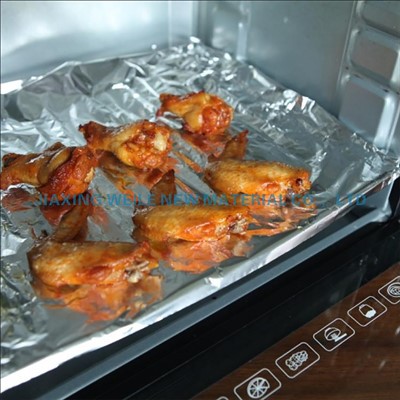
In the baking industry, embossed aluminium foil rolls are perfect for lining baking pans. They can help with heat distribution and make it easier to remove baked goods from the pan. Our Baking Pastry Aluminum Foil Paper Roll is a popular choice among bakers.
Another common application is in insulation. The embossed pattern can create air pockets in the foil, which helps to improve its insulating properties. This makes it suitable for use in building insulation, as well as in automotive and aerospace applications.
Why Choose Our Embossed Aluminium Foil Rolls
As a supplier, we take pride in offering high - quality embossed aluminium foil rolls. We have a team of experienced professionals who oversee every step of the production process to ensure that our products meet the highest standards.
We also offer a wide range of customization options. Whether you need a specific pattern, thickness, or width, we can work with you to create the perfect embossed aluminium foil rolls for your needs. And if you're looking for a reliable and cost - effective solution for your packaging or insulation requirements, our Aluminum Foil Wrap ROLL is a great choice.


Contact Us for Procurement
If you're interested in purchasing embossed aluminium foil rolls, we'd love to hear from you. Whether you're a small business or a large corporation, we can provide you with the right products at competitive prices. Just reach out to us, and our sales team will be happy to discuss your requirements and provide you with a quote.
References
- "Aluminium Foil Technology" by European Aluminium Foil Association
- "Handbook of Aluminium" edited by Joseph E. Hatch