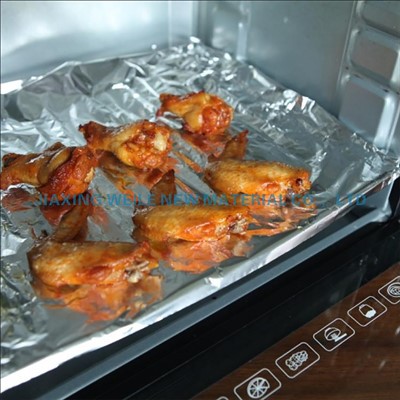
Can I use a household aluminum foil roll to line a baking pan?
Hey there, fellow home bakers and cooking enthusiasts! I'm a supplier of household aluminum foil rolls, and I get this question a lot: “Can I use a household aluminum foil roll to line a baking pan?” Well, let's dive right into it.
First off, the short answer is yes, you can use a household aluminum foil roll to line a baking pan. There are plenty of good reasons why you'd want to do this. For starters, it's a great way to keep your pan clean. Baked goods can leave behind all sorts of messes - sticky sauces, crumbs, and caramelization. By lining your pan with aluminum foil, you can simply lift the foil out when you're done baking, and your pan will be as clean as a whistle. This saves you a whole lot of time and effort on scrubbing.
Another benefit is that it can help with even baking. Aluminum foil is a great conductor of heat. When you line your pan with it, the foil helps distribute the heat more evenly across the bottom and sides of the pan. This means that your baked goods are less likely to have unevenly cooked spots. Whether you're making a batch of brownies, a tray of cookies, or a casserole, lining the pan with foil can give you better results.
But before you go and start lining every pan in your kitchen with foil, there are a few things you need to keep in mind.


One concern that some people have is about the safety of using aluminum foil in the oven. The good news is that aluminum foil is generally considered safe for use in cooking. However, it's important to use it correctly. The main issue with aluminum is that it can leach into food under certain conditions. This is more likely to happen when you're cooking acidic foods, like tomatoes or citrus fruits. The acid in these foods can react with the aluminum in the foil, causing some of the aluminum to dissolve into the food.
To minimize this risk, you should avoid using aluminum foil to line a pan if you're cooking highly acidic foods. If you do need to use foil, make sure there's a barrier between the foil and the food. You could use a layer of parchment paper or a silicone baking mat between the foil and the acidic food.
Another thing to keep in mind is the heat resistance of the foil. Most household aluminum foil rolls are designed to withstand high temperatures, but there's a limit. If you expose the foil to temperatures that are too high, it can start to melt or burn. This can not only ruin your foil and your pan but also be a fire hazard. So, always check the manufacturer's instructions for the maximum temperature the foil can handle.
Now, let's talk about the types of household aluminum foil rolls available. As a supplier, I offer a few different options. One of our popular products is the 8011 Household Kitchen Food Aluminium Foil ROLL. This foil is made from high - quality aluminum and is perfect for lining baking pans. It's thick enough to hold up well during baking but still flexible enough to mold to the shape of your pan.
We also have the Food Packing Cooking Baking Aluminium Foil Roll. This roll is designed for all sorts of cooking and baking tasks, including lining pans. It has a smooth surface that helps prevent food from sticking, making it easy to remove your baked goods once they're done.
And then there's the Aluminum Foil Wrap ROLL. This is a versatile option that can be used for wrapping food, covering dishes, and of course, lining baking pans. It's a great all - around product for your kitchen.
When you're lining a baking pan with aluminum foil, there are a few tips to make the process easier. First, tear off a piece of foil that's larger than your pan. You want to have enough foil to hang over the edges of the pan so you can easily lift the foil out with your baked goods. Next, fold the foil in half or quarters to make it easier to handle. Then, place the folded foil in the pan and unfold it. Press the foil gently into the corners and sides of the pan to make sure it fits snugly.
If you're making a round pan, you can cut the foil into a circle and then pleat the edges to make it fit the pan. And if you're using a square or rectangular pan, you can fold the corners of the foil to create a neat fit.
In addition to baking, household aluminum foil rolls have many other uses in the kitchen. You can use it to cover leftovers in the fridge, wrap sandwiches for lunch, or even make a makeshift funnel for pouring liquids. It's truly a multi - purpose product that every kitchen should have.
So, to sum it up, using a household aluminum foil roll to line a baking pan is a great idea as long as you do it right. Just be aware of the potential risks with acidic foods and high temperatures, and choose the right type of foil for your needs.
If you're interested in purchasing our high - quality household aluminum foil rolls, we'd love to have a chat with you. Whether you're a home cook looking to stock up your kitchen or a business in need of bulk supplies, we can provide you with the perfect solution. Reach out to us to start a conversation about your procurement needs.
References
- Food and Drug Administration (FDA). Information on the safety of aluminum in food contact materials.
- Various cooking and baking science resources on heat distribution and food safety.