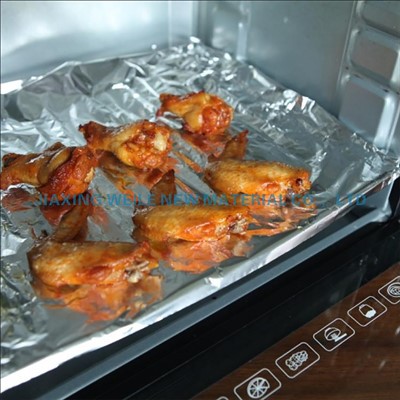
Yo, what's up everyone! I'm a supplier of plain aluminum foil rolls, and today I wanna chat about something pretty interesting: Can a plain aluminum foil roll be used to make a heat-resistant mat?
First off, let's talk a bit about what plain aluminum foil is. It's that shiny, thin sheet of aluminum we're all familiar with. You've probably used it in the kitchen for wrapping food, baking, or even just covering leftovers. It's super versatile and can be found in almost every household.
Now, let's get to the main question. Can it be used as a heat-resistant mat? Well, aluminum has some pretty cool properties. It has a relatively high melting point, around 660 degrees Celsius (1220 degrees Fahrenheit). That means it can withstand a fair amount of heat without melting right away.
When you're using it as a heat-resistant mat, it can act as a barrier between a hot object and the surface below. For example, if you have a hot pan fresh out of the oven, placing it on a mat made of aluminum foil can prevent the heat from directly transferring to your countertop and potentially causing damage.
But there are some things to keep in mind. The thickness of the aluminum foil matters a lot. Thinner foils might not be as effective at distributing the heat evenly. They could also tear or warp more easily under high heat. On the other hand, thicker aluminum foils, like the Heavy Duty Greaseproof Aluminium Foil ROLL, are more likely to hold up better. They can handle the heat and maintain their shape for a longer time.
Another factor is the duration of exposure to heat. If you're just using it for a short period, like taking a hot dish out of the oven and setting it down for a few minutes, a regular plain aluminum foil roll should work fine. But if you're planning to use it for something that generates continuous heat over a long time, you might want to consider using multiple layers of foil or a thicker grade.
One of the great things about using aluminum foil as a heat-resistant mat is its affordability. You can get a roll of Food Packing Cooking Baking Aluminium Foil Roll at a very low cost. It's also widely available, so you don't have to go on a wild goose chase to find it.
Now, let's talk about some of the potential drawbacks. Aluminum foil is a good conductor of heat. While this can be an advantage in terms of quickly dissipating the heat, it also means that the edges of the foil can get quite hot. You need to be careful when handling the mat, especially if it's been in contact with a very hot object.
Also, if you're using it in a high - humidity environment, the aluminum foil can start to corrode over time. This might not be a big deal if you're only using it occasionally, but for long - term use, it's something to keep an eye on.
In some cases, you might want to consider using an embossed aluminum foil roll, like the Embossed Aluminium Foil Roll. The embossed pattern can add some extra strength and durability to the foil. It can also increase the surface area, which helps with heat dissipation.
So, in conclusion, a plain aluminum foil roll can definitely be used to make a heat - resistant mat. It has its pros and cons, but overall, it's a practical and cost - effective option for many situations. Whether you're in the kitchen, at a picnic, or doing some DIY projects, it can come in handy.


If you're interested in purchasing high - quality plain aluminum foil rolls for making heat - resistant mats or for any other purpose, feel free to reach out. We have a wide range of options available, from different thicknesses to various lengths. Contact us for more information and to start a procurement negotiation.
References
- Basic knowledge of aluminum properties from general materials science textbooks
- Practical experience in using aluminum foil in various applications.